Loading...
Serving Delray Beach, FL and surrounding areas. (561) 960-0144
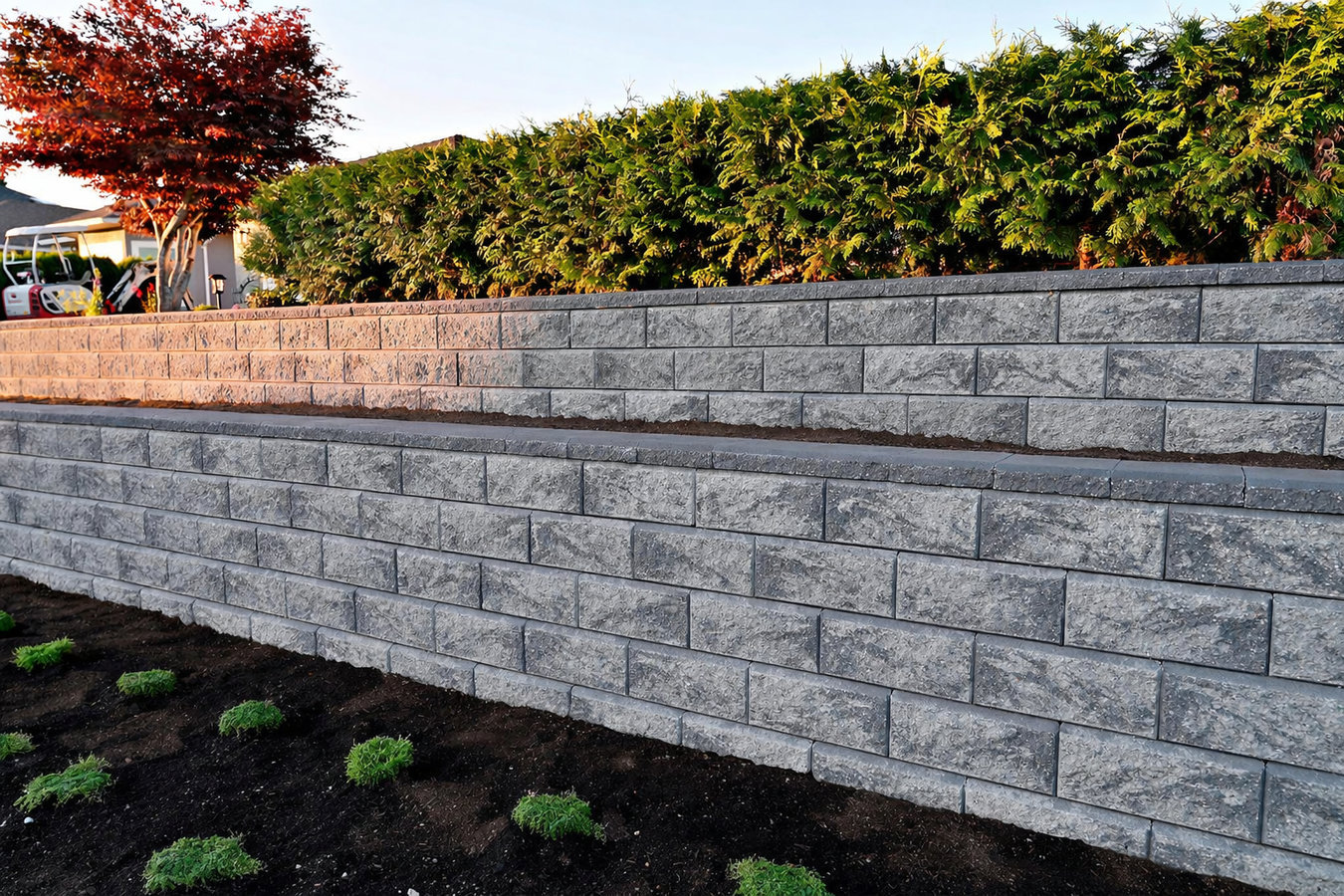
Soil washing away after every storm? We build concrete retaining walls in Delray Beach with proper drainage and deep footings - built for South Florida rain and sandy soil.
Concrete retaining walls in Delray Beach hold back soil on sloped or raised areas so it stops washing across your yard, driveway, or foundation - most residential jobs take two to four days of active work with a seven-to-ten-day curing period before backfill begins, plus the Palm Beach County permit process for walls above a certain height.
Most homeowners reach out after they notice soil moving during summer storms, an old wall beginning to lean, or water pooling against their foundation during rainy season. Sandy coastal soil and 62-plus inches of annual rainfall make Delray Beach one of the most demanding environments for retaining walls in the state - which is exactly why drainage and footing depth are not optional here.
If your project also involves leveling a patio area or supporting structural loads, our concrete floor installation work often complements retaining wall projects where a flat, usable outdoor surface is the end goal.
If you see bare patches, ruts, or a trail of dirt crossing your lawn or driveway after a heavy storm, your soil is actively eroding. In Delray Beach, summer storms can drop several inches of rain in a single afternoon - enough to strip a raised bed or slope down to bare ground over a few seasons. A retaining wall stops the movement and keeps your landscaping where it belongs.
A wall that is beginning to tilt away from the soil it holds is under more pressure than it can manage. Horizontal cracks near the middle of a wall, or sections that bow outward, are signs of active failure - not just normal aging. This is worth addressing quickly because a wall that falls can damage fencing, landscaping, vehicles, or anything else in its path.
If water collects against your home during Delray Beach's rainy season, it may mean there is no grade change or barrier directing runoff away from the structure. A retaining wall combined with proper grading can redirect that water before it causes foundation damage or flooding. This is one of the most practical reasons homeowners in low-lying parts of Delray Beach invest in retaining walls.
If the lot next door sits higher than yours and sends water onto your property every time it rains, a retaining wall along your property line can redirect that flow. This is common in Delray Beach neighborhoods where adjacent lots were graded at different times or by different builders. Talk to a contractor about your options before the next rainy season begins.
We build cast-in-place concrete retaining walls from short landscape borders to full structural walls on sloped lots. Every project starts with a site visit to assess soil conditions, drainage patterns, and any HOA guidelines before we propose a design. Because Delray Beach sits on sandy coastal soil that does not grip or support loads the way packed fill does, footing depth and gravel drainage behind the wall are factored into every quote - not treated as optional upgrades. We also pair retaining wall work with concrete footings when a project requires supporting posts, columns, or additional structural elements near the wall.
For homeowners in HOA-governed communities - which covers a large portion of Delray Beach neighborhoods - we review your association guidelines before finalizing any design. Wall height, finish material, and color are all areas where HOA rules frequently go beyond what county code requires, and getting that check done early means the finished wall meets every standard the first time.
Shorter walls that hold raised planting beds, define yard levels, or separate drainage zones. The most common residential project and the most straightforward to permit.
Taller walls holding back significant soil on sloped lots. Requires deeper footings, rebar reinforcement, and a Palm Beach County permit with engineering review.
Concrete formed and finished to mimic stone, brick, or smooth stucco. Suited to HOA-governed communities where curb appeal and architectural consistency matter.
Low walls designed to redirect water running onto your property from neighboring lots. Combined with proper grading to move water away from your home's foundation.
Most of Delray Beach sits on flat, sandy coastal soil just a few feet above sea level. That soil does not hold weight or resist water movement the way compacted fill does, which means any raised area - a slope, a planting bed, a graded lot line - needs active support to stay in place. Delray Beach also receives roughly 62 inches of rain per year, with the heaviest storms hitting between June and September. That combination of loose soil and intense seasonal rainfall is exactly why drainage behind a retaining wall is not a finishing touch here; it is what keeps the wall standing.
We serve homeowners across Delray Beach and nearby communities including Deerfield Beach and Boynton Beach. Salt air from the Atlantic affects concrete surfaces across the entire region - unsealed walls can start pitting and staining within a few years in this climate, which is why a surface sealant is included in every project scope, not offered as an add-on.
We schedule a free on-site visit to see the slope, soil, and drainage conditions before quoting anything. You receive a written estimate that covers labor, materials, drainage, and permit costs. We respond within 1 business day.
Once you move forward, we submit the Palm Beach County permit application on your behalf. Most residential walls require one - add two to four weeks for review and approval before physical work begins.
The crew digs the footing trench, sets steel reinforcement, and pours the concrete. In Delray Beach's sandy soil, footings go deeper than in other regions to give the wall a stable base. The pour itself typically takes one to two days.
After roughly a week of curing, we install gravel backfill and drainage pipes behind the wall, then backfill with soil. A county inspector signs off on permitted work. A sealant is applied to protect the surface from Delray Beach's salt air and humidity.
Free site visit. Written estimate. We handle the Palm Beach County permit.
(561) 960-0144Every retaining wall we build in Delray Beach includes gravel backfill and drainage pipes behind the wall face. In a city that receives 62 inches of rain per year, drainage is not an add-on - it is the most important part of the job.
Much of Delray Beach sits on sandy soil that does not grip or support weight the way compacted fill does. We dig footings to the depth the site actually requires, not the minimum that saves time. That is what keeps walls standing for decades.
We pull permits and manage the Palm Beach County building process on every applicable job across all 12 service communities. Your wall is inspected, documented, and never a liability at closing or during an insurance claim.
Delray Beach is heavily HOA-governed, and wall height, finish, and color rules vary by community. We ask about your HOA requirements before the first shovel hits the ground so the finished wall meets your association's standards and your county permit.
You can verify our Florida state contractor license at any time on the Florida Department of Business and Professional Regulation website - a two-minute check that separates licensed contractors from unlicensed operators. We also call Florida Sunshine 811 to have underground utility lines marked before any excavation begins - required by Florida law and a step every responsible contractor takes without being asked.
New concrete slabs for garages, patios, utility areas, and outdoor living spaces, properly graded and reinforced for South Florida conditions.
Learn moreLoad-bearing footings that support walls, posts, and structures on Delray Beach's coastal sandy soil where shallow footings commonly fail.
Learn moreSummer storms start in June - scheduling now means your wall is built, drained, and cured before the heavy rain arrives. Call us or request a free estimate online.