Loading...
Serving Delray Beach, FL and surrounding areas. (561) 960-0144
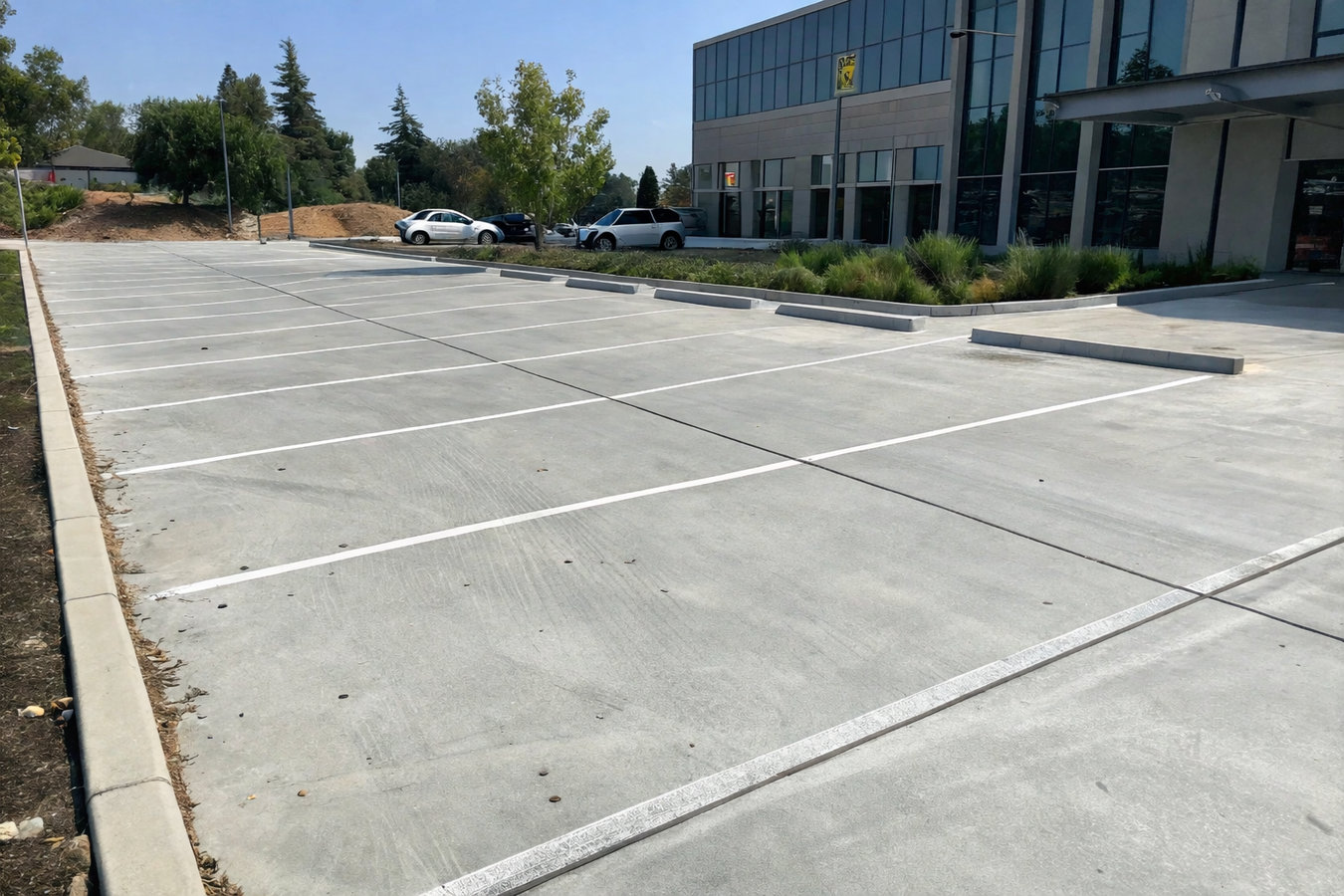
Tired of asphalt that softens in summer and floods after every storm? We build concrete parking lots in Delray Beach that drain properly and hold up to South Florida heat for decades.
Concrete parking lot building in Delray Beach starts with grading the site, building a compacted crushed-stone base, and then pouring a 4-to-6-inch concrete slab with control joints - most standard lots take three to seven working days of active construction, plus a seven-day minimum curing period before the surface opens to vehicle traffic and a city permit review that typically runs two to six weeks before work begins.
Property owners in Delray Beach typically call us when their asphalt lot is soft and rutted from summer heat, when standing water lingers after afternoon storms, or when they are adding parking spaces to meet city or HOA requirements. Concrete is the right material for this climate - it stays rigid in 95-degree heat, drains predictably when graded correctly, and lasts two to three times longer than asphalt under South Florida conditions.
If your project also involves perimeter walls, entry features, or load-bearing columns, our concrete footings work pairs naturally with parking lot construction when the site requires structural support elements beyond the slab itself.
If cracks in your pavement seem wider or longer after Delray Beach's summer storms, water is getting underneath and eroding the base. In South Florida's sandy soil, once that erosion starts, the surface above keeps deteriorating. Patching the top does not fix what is happening underneath - at some point a full replacement costs less than repeated repairs.
Puddles that linger for hours after rain mean the surface is not draining properly - either the slope is wrong, drainage is blocked, or the lot has settled unevenly. In Delray Beach, where heavy afternoon rain is routine from June through September, poor drainage accelerates surface wear and creates slip hazards. A new lot graded correctly solves the problem at the source.
If your current asphalt gets tacky or shows ruts where cars park or turn during Delray Beach's hottest months, the surface is breaking down from heat exposure. Asphalt is petroleum-based and softens in the 90-degree temperatures common from May through September. Replacing with concrete eliminates this completely - concrete stays rigid no matter how hot it gets.
If vehicles regularly scrape their undercarriage entering or exiting, or if you can see visible high and low spots, the lot has settled unevenly - a sign of base failure underneath. In Delray Beach's sandy coastal soil, this kind of settling is more common than in areas with denser ground, and it tends to get worse rather than stabilizing on its own.
We handle the full scope of concrete parking lot projects - from grading and base preparation through the pour, finishing, and city permit coordination. Every project starts with a site visit where we assess drainage patterns, soil conditions, and any HOA or zoning requirements before proposing a design. Because Delray Beach sits on flat, sandy coastal soil, drainage engineering is never an afterthought - it is factored into the slope and grade before a single yard of concrete is ordered. We also build concrete driveways using the same base preparation standards, so residential property owners needing both a driveway and parking area can combine the work into one project.
For commercial and HOA properties, we also handle the permit application process with the City of Delray Beach from start to finish. Stormwater management requirements affect how new paved surfaces are designed in this city, and a contractor who is not familiar with those local rules can create drainage problems and permit complications that cost far more to fix than to prevent. We know the local code and we build to it from the design phase.
Full build from grading and base prep through concrete pour and finishing. Suited to any property adding paved parking for the first time.
Removal of existing asphalt or deteriorated concrete followed by a new pour on a properly prepared base. Ideal for lots that have outlived their useful life.
Adding spaces to an existing concrete or asphalt lot to meet business, HOA, or rental requirements. Includes grading and drainage to match the original surface.
For lots where the primary problem is standing water. The surface is broken up, the grade is corrected, and new concrete is poured to direct runoff away from buildings.
Delray Beach receives roughly 62 inches of rain per year, the bulk of it falling in heavy afternoon downpours from June through September. The city also sits essentially at sea level on sandy coastal soil - a combination that makes drainage engineering the most important design decision in any parking lot project. A lot that is poured without proper slope and drainage connections does not just look bad after a storm - it creates slip hazards, accelerates surface deterioration, and can push standing water toward adjacent buildings. The city has stormwater management requirements that affect how new paved surfaces are designed, and a contractor who is not familiar with those local rules can create permit complications and drainage problems that cost far more to fix than to prevent.
Concrete also holds a clear advantage over asphalt in South Florida's climate that most property owners only discover after their first Florida summer. Asphalt is petroleum-based and softens when temperatures climb above 90 degrees - which happens regularly from May through September in this area. Concrete stays rigid regardless of heat, which means no rutting, no soft spots, and no annual patching cycle. We serve property owners throughout the area, including Pompano Beach and Coral Springs, where the same climate conditions and permitting requirements apply.
We walk the site with you, check drainage patterns, measure the area, and ask about HOA or city requirements you already know about. A written itemized estimate follows within 1 business day - no vague ballpark figures.
We submit the City of Delray Beach permit application on your behalf before any work begins. Plan for two to six weeks of review time depending on current city workload and whether your property is in a flood zone.
We remove existing pavement, grade the ground so water drains away from buildings, and compact a base layer of crushed stone. In Delray Beach's sandy soil, this step is the most critical part of the entire project - it is what keeps the finished lot from settling or cracking.
We pour, spread, and finish the concrete with control joints cut at regular intervals - giving the slab room to move with temperature changes without cracking randomly. A city inspector visits to sign off before the lot opens to traffic, typically after a minimum of 7 days of curing.
We visit the site, assess drainage and soil conditions, and give you a written itemized quote. No pressure, no vague estimates. We respond within 1 business day.
(561) 960-0144Delray Beach is essentially flat, sitting just a few feet above sea level, so water does not drain naturally the way it would on a sloped site. We engineer drainage into every lot design from the start - your lot will drain after a storm, not flood.
Much of Delray Beach sits on sandy soil that doesn't compact like dense clay or rock. A weak base is the number one reason parking lots crack and sink prematurely. We take the time and material the site actually requires - not the minimum that looks fine on pour day.
We handle permit applications for every project across our 12 service communities in Palm Beach and Broward counties. Your finished lot is fully legal, inspected, and documented - never a liability when you sell or renew a business license.
Asphalt softens at the temperatures Delray Beach sees from May through September. Concrete doesn't. A properly built concrete lot here can last 30 to 50 years versus 15 to 20 for asphalt - making concrete the better long-term investment for any property you plan to hold.
The American Concrete Pavement Association guidelines we follow were written for exactly the kind of conditions Delray Beach presents - high moisture, flat terrain, and traffic loads that test a surface year-round. Combining those standards with knowledge of Palm Beach County's local permit requirements and soil conditions is what separates a lot that lasts 40 years from one that needs repairs within the first five.
Structural footings for perimeter walls, posts, and load-bearing supports that need a stable base in Delray Beach's sandy coastal soil.
Learn moreResidential driveway construction with proper drainage and base prep - the same fundamentals that make a good parking lot make a great driveway.
Learn morePermit season fills up fast - lock in your start date before the rainy season arrives and delays your timeline by months.